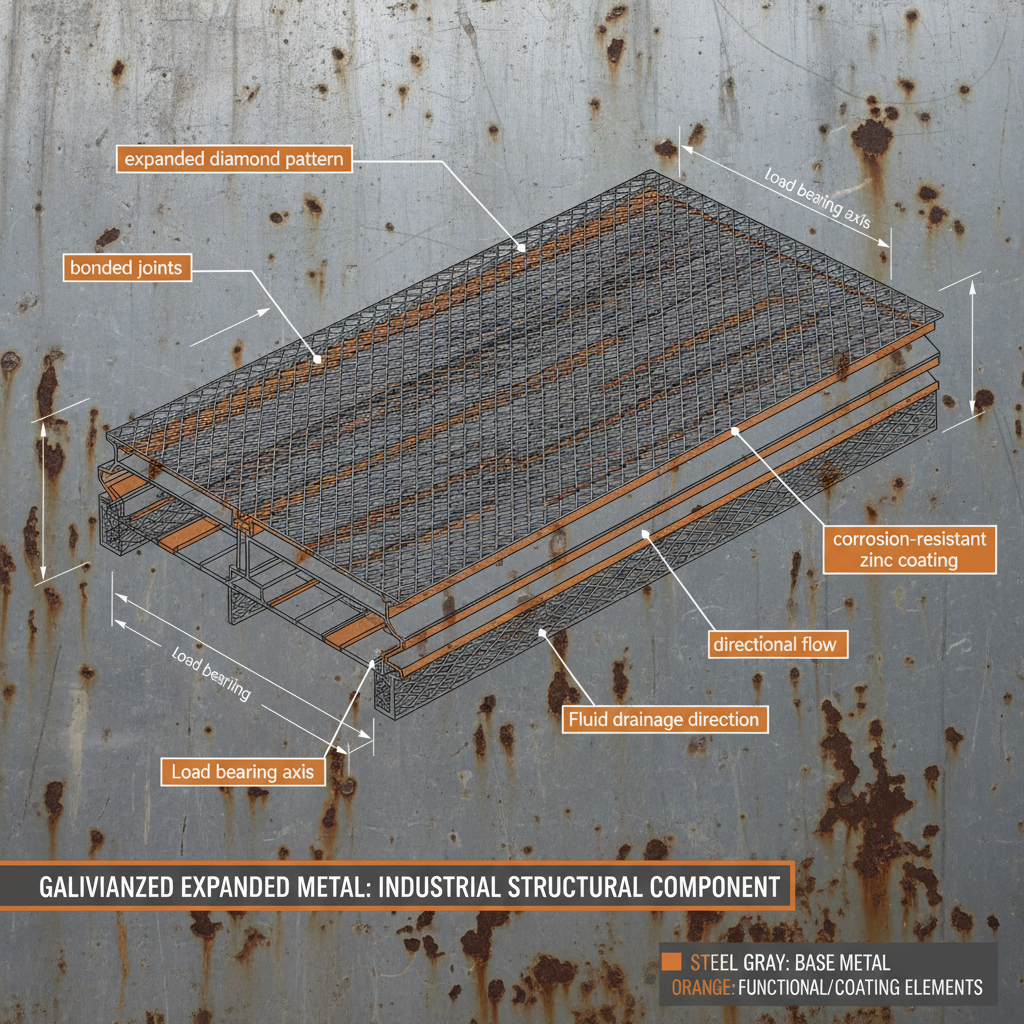
Look, I’ve been running around construction sites for fifteen years, seen it all. And let me tell you, lately everyone's talking about lightweight, high-strength materials. It’s all anyone wants. Apparently, efficiency is king these days. They're pushing for faster builds, lower transportation costs… the usual.
But honestly, a lot of these “innovations” are just re-packaging old ideas. Have you noticed how everything is “disruptive” now? It's exhausting.
The Current Landscape of expanded metal manufacturer
To be honest, expanded metal is nothing new. We’ve been using it for decades, but the demand is up. It’s showing up everywhere – facades, walkways, security fencing, you name it. A lot of that is down to pre-fab construction, really. Makes things faster on site. But strangely, even with all the tech, people still struggle with basic installation. They order the wrong mesh size, the gauge is too thin… simple stuff, but it holds everything up.
The big manufacturers are pushing for more complex patterns, more customization. Which is good, I guess, if you have the budget. But sometimes the simplest design is the most effective.
Design Pitfalls in expanded metal manufacturer Application
One thing I’ve encountered at a few factories – and this is a big one – is engineers designing for aesthetics without thinking about practical installation. Like, they’ll specify a super-complex pattern, beautiful on paper, but impossible to weld or bolt securely without a ton of custom fabrication. Then I'm the one on site trying to explain why their pretty design won't work.
Another trap is underestimating the weight. Expanded metal looks light, but it adds up quickly, especially in larger panels. You need proper support structures, or you’re asking for trouble. And don’t even get me started on corrosion. If you’re near the coast, or using it in a harsh environment, you need to specify the right coating. Galvanization is good, but sometimes you need something more robust.
Honestly, most of the problems I see stem from a lack of communication between the designers and the people who actually have to build with the stuff.
Material Deep Dive: What We Actually Use
We mostly work with carbon steel, obviously. It's the workhorse. You can feel the heft of a good carbon steel sheet – it’s solid. But we also see a lot of stainless steel, especially for projects where aesthetics are paramount. It smells… well, like metal, but it's a cleaner smell, if that makes sense. It's more expensive, of course, and harder to weld. Aluminum is becoming more popular, too, especially for lighter applications. It's soft, though – dents easily.
The quality varies wildly. You get what you pay for, plain and simple. Cheap steel is brittle and prone to cracking. Good steel has a bit of give to it. You learn to recognize the difference after a while. The coating is just as important. A good powder coat feels smooth and even, while a cheap one is bumpy and flakes off easily. I encountered this at a factory in Tianjin last time. The whole shipment was rejected.
And don’t underestimate the importance of proper storage. Leaving steel sheets out in the rain is a recipe for rust. You need to keep them dry and protected.
Real-World Testing of expanded metal manufacturer
Forget the lab tests. Those are good for basic specs, but they don't tell you how something will actually perform in the real world. We test it by using it. We bend it, weld it, drill holes in it, expose it to the elements. Simple as that.
I remember one project, a pedestrian walkway. The engineer insisted on a very fine mesh, claiming it would provide better slip resistance. We installed a small section as a test, and within a week, it was covered in ice and more slippery than glass. Turns out, the small openings filled with water and froze solid. Back to the drawing board.
expanded metal manufacturer Performance Metrics
How expanded metal manufacturer is Actually Used
People think it’s just for security grilles. It’s not. We’re using it for architectural cladding, to create interesting facades. I saw a really cool project in Shanghai, a whole building covered in expanded metal. Looked fantastic.
It's also surprisingly popular for flooring. Especially in industrial settings. Provides good traction, lets dirt fall through. But you need to choose the right mesh size. Too small, and it becomes a safety hazard. Too large, and your tools fall through.
The Good, The Bad, and The Customizable of expanded metal manufacturer
The good? Lightweight, strong, relatively inexpensive. You can cut it, weld it, form it easily. It’s versatile. The bad? It can be sharp if not properly finished. And it can rust if not protected. But honestly, those are minor issues.
Customization is where it gets interesting. We had a customer last year, a furniture manufacturer, who wanted a specific pattern to mimic a particular Art Deco design. Took some doing, but we managed to create a custom die to produce the pattern. It wasn't cheap, but the result was stunning. Anyway, I think that’s a good example of how flexible this stuff can be.
But don't ask for the impossible. Trying to create a complex, 3D pattern is usually a waste of time and money.
expanded metal manufacturer: A Case Study
Last month, that small boss in Shenzhen who makes smart home devices insisted on changing the interface to , and the result was… a complete disaster. He thought it would look “modern” and “premium”, but the existing connectors were perfectly adequate. The new connectors were too delicate, kept breaking, and the whole production line ground to a halt. Cost him a fortune. He went back to the old connectors within a week.
The moral of the story? Don’t change things just for the sake of change. Stick with what works. And listen to the people who actually know what they’re doing.
It’s the same with expanded metal. Don't overthink it. Choose the right material, the right mesh size, the right finish, and it’ll do the job.
Expanded Metal Manufacturer: Key Material Characteristics
| Material Type |
Typical Applications |
Cost (Relative) |
Corrosion Resistance |
| Carbon Steel |
Walkways, Security Grilles, General Construction |
Low |
Low (Requires Coating) |
| Stainless Steel |
Architectural Cladding, High-End Security |
Medium |
High |
| Aluminum |
Lightweight Structures, Decorative Panels |
Medium |
Medium |
| Galvanized Steel |
Outdoor Fencing, Industrial Flooring |
Low-Medium |
Medium |
| Corten Steel |
Sculptural Elements, Weathering Facades |
High |
Very High (Forms Protective Rust Layer) |
| Expanded Aluminum Alloy |
Aerospace, Specialized Lightweight Applications |
Very High |
High |
FAQS
Honestly, it's not thinking about installation. They get caught up in the look and forget about how it's actually going to be put together. Things like weldability, bolt hole alignment, and edge finishing are crucial, and often overlooked. It adds time and money to the project, guaranteed.
It depends entirely on what you’re trying to achieve. For security, you want a small mesh size to prevent intruders. For flooring, you need a size that provides good traction but doesn’t trap debris. For aesthetics, it’s a matter of personal preference, but bigger openings let more light through. A quick rule of thumb: smaller is stronger, larger is lighter and offers more visibility.
Galvanizing is a process where you coat the steel with zinc to prevent rust. It's a good, economical option. Powder coating is a dry finishing process where you apply a colored powder and bake it on. It offers a wider range of colors and a more durable finish, but it’s more expensive. If you need something that's going to withstand harsh weather conditions, powder coating is the way to go.
Absolutely. Steel is one of the most recycled materials on the planet. Expanded metal can be melted down and reused, so it’s a relatively sustainable choice. We always encourage clients to recycle any scrap material generated during installation. It's the responsible thing to do.
You have to consider the flexibility of the material. In a seismic event, you want something that can deform without fracturing. Expanded metal can be surprisingly resilient, but it needs to be properly supported and designed to withstand the forces. Reinforcement is key – it can’t just be a lightweight cladding solution.
The tooling costs are the big one. Creating a custom die is expensive. The more complex the pattern, the higher the tooling cost. Also, the material thickness and the sheet size affect the price. And of course, the quantity you order. Larger orders get better pricing. Simple as that.
Conclusion
So, there you have it. Expanded metal is a versatile, durable, and cost-effective material. But it’s not a magic bullet. It requires careful planning, proper installation, and a healthy dose of common sense. It’s been around forever, and it’ll likely be around for a long time to come.
Ultimately, whether this thing works or not, the worker will know the moment he tightens the screw. That’s all there is to it. Visit our website: www.ccmetalmesh.com to learn more and get a quote.