0%

Table of Contents

Honestly, this whole filter mesh manufacturer game… it’s been changing fast. Used to be, you just needed something that wouldn’t fall apart after a week. Now everyone wants… well, everything. Lightweight, super strong, corrosion resistant, doesn't clog easily – the list goes on. Have you noticed how much everyone’s focused on extending the life of equipment lately? It’s all about reducing downtime, and a good filter mesh manufacturer is key to that.

It's funny, you spend months perfecting a design, and then you get out on site and realize something completely obvious you missed. Like, the way it handles in wet conditions. Or how easily it gets tangled when you’re trying to roll it out. I encountered this at a chemical plant last time – beautiful mesh, theoretically perfect, but the guys couldn’t get it properly positioned because it was sticking to everything. Silly stuff.

The materials themselves… that's where things get interesting. We're moving beyond just stainless steel, though that's still a workhorse. Titanium's great, obviously, but the price...oof. Then there's polypropylene, that plastic stuff. It smells a bit like burnt sugar when you cut it, strangely enough. Feels different than metal, naturally. You gotta be careful with it, though – UV exposure degrades it pretty quickly. And the weaving… that’s an art form. A good weave feels tight, uniform. You can tell just by running your hand over it if it’s going to hold up.


Navigating the Evolving Landscape of the Filter Mesh Manufacturer Industry

Industry Trends and Design Pitfalls

Navigating the Evolving Landscape of the Filter Mesh Manufacturer Industry

To be honest, everyone’s chasing smaller mesh sizes. They want to filter out smaller particles, get better efficiency. Which sounds great on paper, but it also means the mesh is more prone to clogging. And cleaning it… forget about it. It’s a constant trade-off. Anyway, I think the biggest pitfall is getting too caught up in lab tests. You can run all the simulations you want, but nothing beats real-world feedback.

I’ve seen designs that look amazing in a controlled environment, but completely fail when exposed to actual industrial conditions. The vibrations, the temperature swings, the sheer amount of abuse these things take… it's a different world. You need to build in redundancy, allow for easy maintenance, and understand that things will go wrong.

Materials and Handling

The move towards more sustainable materials is definitely a trend. Recycled polymers are getting a lot of attention, but the consistency can be an issue. Sometimes a batch will be great, other times… not so much. You gotta have a good quality control process. And speaking of quality control, that initial smell check on polypropylene? Seriously, it’s a thing. If it smells off, something’s wrong with the manufacturing process.

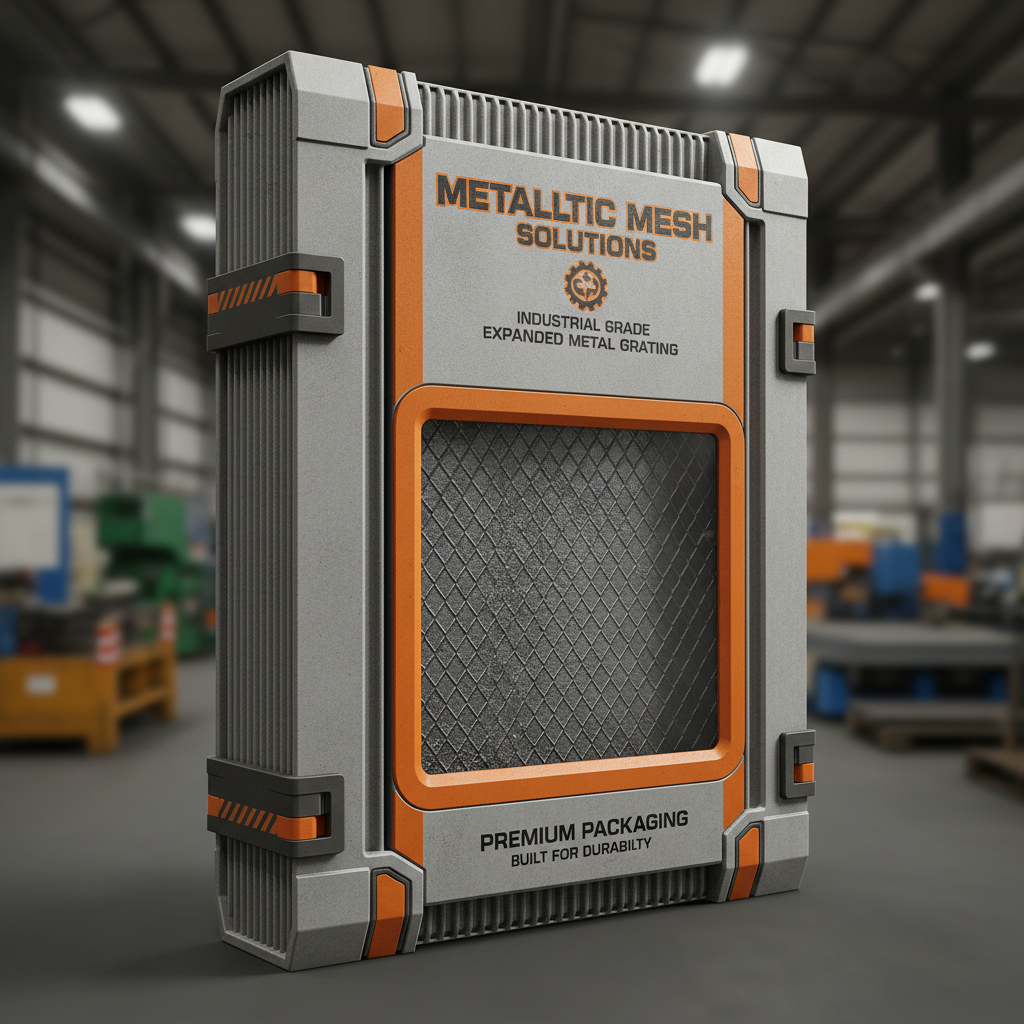
Handling is a huge deal, too. Some of these finer meshes are incredibly fragile. You can’t just toss them around like a roll of chicken wire. We’ve started including more robust packaging, but it adds to the cost. It’s a balancing act. The steel ones, of course, are tougher, but they're heavier. You need to consider the ergonomics of the application.

There's this new ceramic-coated mesh that's showing promise. It's incredibly strong and resistant to pretty much everything. But it's expensive, and the manufacturing process is… complicated, to say the least. They're still working out the kinks.

Real-World Testing

Lab tests are fine for initial screening, but the real test is always in the field. We’ve started doing more on-site trials, letting customers use the mesh in their actual processes. It's messy, and it takes time, but the data you get is invaluable. We had one test where the initial lab results were excellent, but the mesh clogged up within hours when used in a wastewater treatment plant. Turns out, there were some organic compounds in the water that weren't accounted for in the lab tests.

I once saw a mesh fail spectacularly because someone decided to use a pressure washer to clean it. A pressure washer! It looked like a spiderweb after a hurricane. You gotta educate the users, tell them what they can and can't do.

We also do a lot of drop tests, impact tests, and fatigue tests. But honestly, sometimes the simplest test is the best. Just watching someone try to install the mesh, and seeing where they struggle. That tells you more than any fancy piece of equipment.

Usage and Applications

People use this stuff in ways you wouldn’t believe. It's not just about filtering liquids and gases. We've had customers use it for soundproofing, for vibration damping, even for creating lightweight composite structures. The food processing industry is a big one, obviously. They're super picky about hygiene and material safety.

And it’s not always what you think. I thought the oil and gas industry would be our biggest market, but surprisingly, pharmaceuticals are a close second. They need extremely high purity filtration.

filter mesh manufacturer Performance Across Industries


Advantages and Disadvantages

The biggest advantage is, of course, protection. Protecting equipment, protecting processes, protecting people. A good filter mesh manufacturer can save you a fortune in downtime and repairs. And the lifespan… we’re getting longer and longer lifespans with the newer materials.

But there are downsides. Cost is a big one. High-performance materials are expensive. And they can be difficult to work with. Some of them require specialized tools and training. And honestly, sometimes simpler is better. You don't always need the most advanced technology.

Customization Options

We do a lot of customization. Different mesh sizes, different materials, different coatings, different shapes… you name it. Last month, that small boss in Shenzhen who makes smart home devices insisted on changing the interface to , and the result was a three-week delay and a whole lot of headaches. He said it was “for the future.” I just rolled my eyes.

But seriously, customization is key. Every application is different. You can’t just offer a one-size-fits-all solution. We’ve done custom weaves with embedded sensors, meshes with antimicrobial coatings, and even meshes that change color when they’re clogged. It's fun stuff, actually.

A Customer Story and Final Thoughts

I remember this one project at a brewery. They were having problems with yeast clogging their filtration system. We tried a few different standard meshes, but nothing worked. Finally, we custom-designed a mesh with a unique weave pattern, and it solved their problem overnight. The head brewer sent me a case of beer as a thank you. That’s a good feeling.

It's all about understanding the customer's needs and finding the right solution. Sometimes that means using off-the-shelf products, other times it means designing something completely new. But you always need to keep it practical, keep it simple, and keep it reliable.

And it’s strangely satisfying to know that something you worked on is helping keep things running smoothly somewhere out there.

Summary of Key Considerations for filter mesh manufacturer Selection

Material Mesh Size Durability Cost
Stainless Steel 20-100 microns 8/10 Medium
Polypropylene 5-50 microns 6/10 Low
Titanium 10-80 microns 10/10 High
Nylon 1-40 microns 5/10 Low
Ceramic Coated 5-75 microns 9/10 Very High
Polyester 2-30 microns 4/10 Very Low

FAQS

What's the best material for filter mesh in highly corrosive environments?

For highly corrosive environments, titanium is generally the best choice due to its exceptional resistance to corrosion. However, its high cost can be a limiting factor. Alternatively, specialized stainless steel alloys like Alloy 20 or Hastelloy can offer good corrosion resistance at a lower price point. Ultimately, the best material depends on the specific chemicals involved and the operating temperature.

How often should filter mesh be replaced?

Replacement frequency depends heavily on the application and the type of contaminants being filtered. Regularly scheduled inspections are vital. Look for signs of clogging, tearing, or corrosion. As a general guideline, for high-demand applications, replacement every 3-6 months is common. For less demanding applications, annual replacement may suffice, but a visual inspection should always precede that decision.

What mesh size is ideal for removing bacteria from water?

To reliably remove bacteria from water, a mesh size of 0.22 microns or smaller is generally recommended. This will filter out most common bacterial species. However, it's important to note that mesh filtration alone doesn't guarantee complete sterilization. It often needs to be combined with other treatment methods like UV disinfection or chemical treatment for optimal results.

Can filter mesh be cleaned and reused, or is it disposable?

Some filter mesh can be cleaned and reused, depending on the material and the type of contaminants. Stainless steel and certain polymer meshes can withstand cleaning with appropriate solvents or detergents. However, cleaning can compromise the mesh’s integrity over time. Disposable mesh is often more practical for applications with heavily contaminated fluids or where maintaining strict hygiene is critical.

What are the key factors to consider when customizing filter mesh?

Key factors include the application, the fluid or gas being filtered, the particle size to be removed, the operating temperature and pressure, and the desired flow rate. Material selection, mesh size, weave pattern, and dimensions are all customizable aspects. It's crucial to provide detailed specifications to ensure the customized mesh meets the specific requirements.

How does the weave pattern affect filter mesh performance?

The weave pattern significantly impacts performance. Plain weaves are common and offer good strength and stability. Twill weaves provide a tighter weave, improving filtration efficiency but potentially reducing flow rate. Dutch weaves have a varying density, with finer mesh on the filtering side and coarser mesh on the support side. The optimal weave depends on the specific filtration needs.

Conclusion

Ultimately, this filter mesh manufacturer game comes down to finding the right balance between performance, cost, and durability. There’s no magic bullet, no single solution that works for everything. It’s about understanding the application, knowing your materials, and being willing to get your hands dirty. And remembering that a fancy design is useless if it can’t withstand the rigors of the real world.

Look, all the calculations and simulations in the world won’t tell you if something’s going to work. Whether this thing works or not, the worker will know the moment he tightens the screw. That’s the bottom line. If you want to learn more about getting the right mesh for your application, visit our website: filter mesh manufacturer.


William Davis

William Davis

William Davis is the Quality Control Manager at Anping Chencai Metal, dedicated to upholding the company's commitment to excellence and compliance. He meticulously oversees every stage of production, from raw material sourcing to final product inspection. William ensures adherence to both internal quality standards and international regulations, including the UDEM
Previous Exploring the Versatility and Practical Considerations of Expanded Metal for Sale
Next perforated metal sheet manufacturers