Expanded metal sheet is a versatile construction material with a growing global presence. Its unique open grid pattern provides excellent strength-to-weight ratio, making it ideal for a wide range of applications from architectural facades and safety grating to filtration systems and reinforcement. Understanding its properties and applications is crucial for architects, engineers, and manufacturers looking for durable, cost-effective, and sustainable solutions.
The demand for expanded metal sheet is fueled by increasing infrastructure development, particularly in emerging economies, and a growing emphasis on safety and security. Industries such as construction, transportation, and renewable energy are driving innovation in expanded metal sheet design and manufacturing, leading to lighter, stronger, and more adaptable products. Its use is expanding beyond traditional applications, entering new markets like electric vehicle battery housings and acoustic panels.
This material offers a compelling combination of functionality and aesthetics. It’s a robust solution that addresses challenges in safety, load-bearing capacity, and ventilation, contributing to more efficient and resilient infrastructure globally. The understanding of expanded metal sheet's benefits empowers professionals to create innovative and sustainable designs.
Introduction to expanded metal sheet
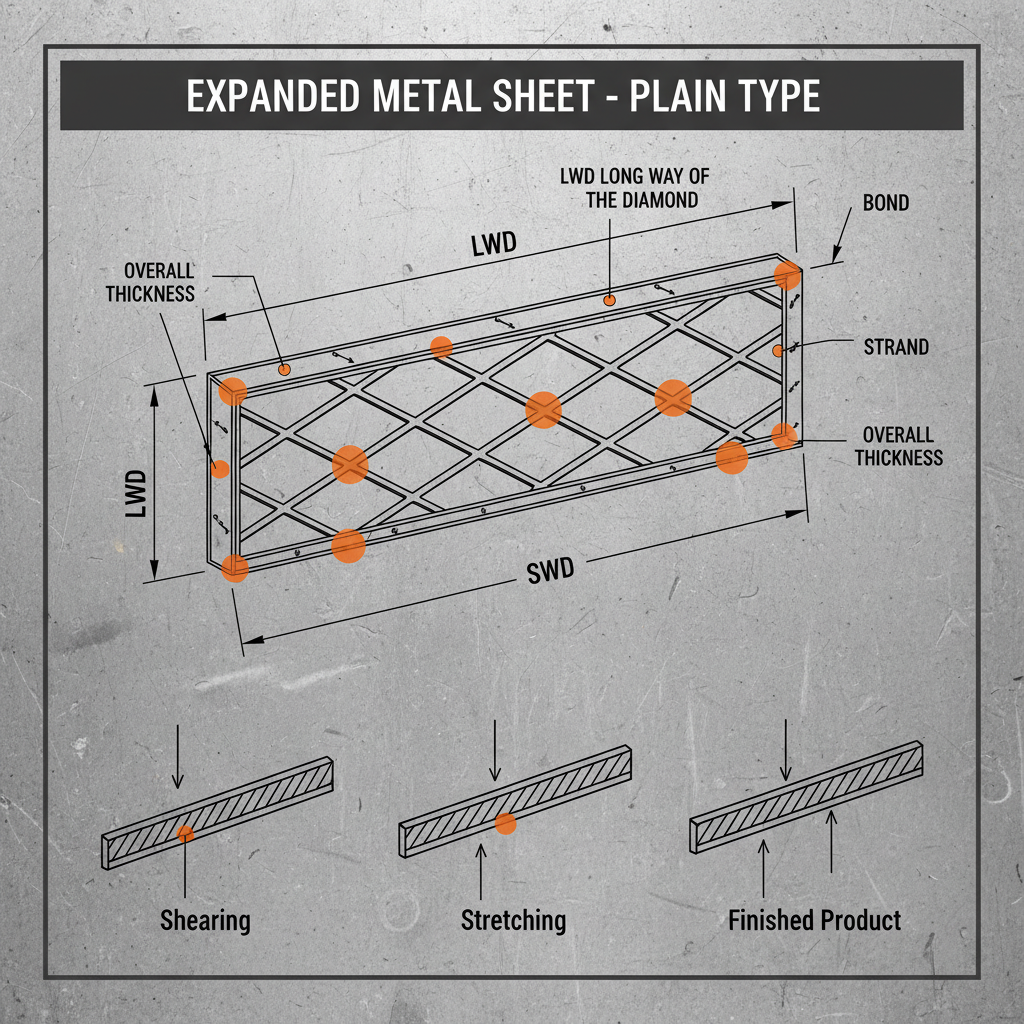
The production of expanded metal sheet involves slitting and stretching sheet metal, creating a rigid, one-piece structure with diamond-shaped openings. This process maintains a high percentage of the original metal's strength, making it a highly efficient material choice. The resulting product finds widespread use in a variety of industries because of its durability and unique properties.
The versatility of expanded metal sheet allows it to be readily fabricated, cut, and formed to meet specific design requirements. Its open grid design offers excellent ventilation, light transmission, and fluid passage, opening up applications beyond simple structural support. From providing safe walkways to filtering industrial components, the possibilities are extensive.
Global Relevance of expanded metal sheet
The global expanded metal sheet market is projected to reach substantial growth in the coming years, driven by infrastructure investments and industrial expansion. According to a recent report by Grand View Research, the global metal mesh market, which includes expanded metal, was valued at USD 18.81 billion in 2022 and is expected to expand at a compound annual growth rate (CAGR) of 5.3% from 2023 to 2030. This growth is particularly pronounced in regions like Asia-Pacific, where rapid urbanization and industrialization are underway.
A significant challenge addressed by expanded metal sheet is the need for durable and safe infrastructure, especially in disaster-prone areas. Traditional building materials may not withstand extreme weather events, but expanded metal provides a robust alternative for protective barriers, roofing, and structural reinforcement. This is particularly relevant in developing countries where access to reliable building materials is often limited.
Furthermore, the increasing demand for sustainable materials is contributing to the popularity of expanded metal sheet. It's often manufactured from recycled metals and is itself recyclable, minimizing its environmental impact. The long lifespan of expanded metal sheet further reduces the need for frequent replacements, conserving resources and lowering lifecycle costs.
Defining expanded metal sheet
Expanded metal sheet is fundamentally different from woven wire mesh. It’s created by making slits in a solid plate of metal and then stretching the metal, which opens up the slits to form an interlaced pattern with diamond-shaped openings. This one-piece construction distinguishes it from welded wire mesh, where individual wires are joined together.
This unique manufacturing process directly connects expanded metal sheet to modern industrial needs. It's a solution born from the demand for strong, lightweight materials capable of handling heavy loads, providing secure enclosures, and optimizing airflow. This positions it as crucial to modern industry.
The material’s application extends beyond purely industrial contexts; its role in humanitarian aid, such as providing temporary shelters and reinforcing disaster relief structures, showcases its relevance to global well-being. Its durability, ease of transport, and quick installation make it an ideal material for rapid response scenarios.
Key Characteristics of expanded metal sheet
One of the defining traits of expanded metal sheet is its exceptional Durability. The single-piece construction eliminates welds and joints that can weaken over time, resulting in a product that is resistant to fatigue, corrosion, and impact damage. This makes it suitable for demanding environments and long-term applications.
Versatility is another core aspect. Expanded metal sheet can be fabricated into a wide range of shapes and sizes, offering designers the freedom to create custom solutions. It can be bent, curved, cut, and punched without compromising its structural integrity. This adaptability is vital for diverse applications.
Expanded Metal Sheet Performance Characteristics
Applications of expanded metal sheet Worldwide
In the construction industry, expanded metal sheet serves as safety grating for walkways, stair treads, and platforms, providing a secure and slip-resistant surface. It's also used extensively for facade cladding, offering both aesthetic appeal and protection from the elements. Across the globe, you’ll find it utilized in infrastructure projects of all sizes.
The automotive sector employs expanded metal sheet in radiator grills, speaker covers, and air filters, capitalizing on its strength and ventilation properties. In post-disaster relief operations, it’s deployed for temporary shelters, reinforcing structures, and creating secure perimeters. Its rapid deployment capabilities save time and resources in critical situations.
Advantages and Long-Term Value of expanded metal sheet
The economic benefits of using expanded metal sheet are significant. Its durability translates into lower maintenance and replacement costs over the lifespan of a project. The material’s inherent strength often allows for lighter gauge materials to be used, reducing material costs without sacrificing performance.
Beyond financial advantages, the sustainable nature of expanded metal sheet provides long-term value. Often manufactured from recycled materials and being fully recyclable itself, its environmental footprint is minimal. This aligns with growing corporate social responsibility initiatives and regulatory requirements promoting sustainable construction practices.
Future Trends in expanded metal sheet Technology
Ongoing research is focused on developing new alloys and coatings to enhance the corrosion resistance and performance of expanded metal sheet, particularly in harsh environments. The integration of smart technologies, such as embedded sensors for structural health monitoring, is also gaining traction.
Automation and digital manufacturing techniques are streamlining the production process, enabling greater precision and customization. This allows for the creation of complex designs and tailored solutions for specific applications. Furthermore, the increasing adoption of Building Information Modeling (BIM) is facilitating the seamless integration of expanded metal sheet into larger construction projects.
The development of more sustainable manufacturing processes, including the use of renewable energy sources and closed-loop recycling systems, is becoming increasingly important. These innovations will contribute to a more circular economy and reduce the environmental impact of expanded metal sheet production.
FAQS
Expanded metal sheet excels in construction as safety grating, walkway surfaces, stair treads, facade cladding, and reinforcing elements. Its open grid design allows for excellent ventilation and light transmission, while its durability ensures long-lasting performance. It is frequently used in industrial facilities, public spaces, and structural applications where safety and robustness are critical.
Generally, expanded metal sheet is more cost-effective than perforated metal for comparable strength. This is because expanded metal uses a greater percentage of the original metal, requiring less material removal. While perforated metal can offer more precise hole patterns, expanded metal maintains superior strength due to its one-piece construction and stretching process, minimizing weak points.
Expanded metal sheet is commonly produced from carbon steel, stainless steel, aluminum, and galvanized steel. The choice of metal depends on the specific application and required properties. Carbon steel offers high strength and is cost-effective for general use. Stainless steel provides superior corrosion resistance for harsh environments. Aluminum is lightweight and ideal for applications where weight is a concern.
Yes, expanded metal sheet can be suitable for outdoor applications, especially when manufactured from corrosion-resistant materials like stainless steel or galvanized steel. Galvanization provides a protective zinc coating, while stainless steel's inherent properties resist rust and corrosion. Proper surface treatment and maintenance can further extend its lifespan in harsh environments.
While strong, expanded metal sheet can be less effective at blocking visibility or sound compared to solid materials. The open grid pattern may not be suitable for applications requiring complete privacy or noise reduction. Additionally, sharp edges can be a safety concern if not properly finished or guarded, requiring careful fabrication and installation.
Yes, expanded metal sheet can be painted or coated to enhance its appearance, provide additional corrosion protection, or achieve specific functional properties. Proper surface preparation, including cleaning and priming, is crucial for ensuring good adhesion. Powder coating and galvanizing are common methods for providing long-lasting protection and aesthetic finishes.
Conclusion
Expanded metal sheet represents a compelling combination of strength, versatility, and sustainability. Its unique manufacturing process yields a durable, lightweight material with applications spanning construction, automotive, industrial filtration, and disaster relief. The material's ongoing innovation, driven by demand for eco-friendly solutions and improved performance, ensures its continued relevance in a rapidly changing world.
Investing in expanded metal sheet solutions offers long-term economic and environmental benefits. By embracing advancements in manufacturing and material science, and by prioritizing responsible sourcing and recycling practices, we can unlock the full potential of this versatile material, contributing to a more resilient, sustainable, and innovative future. Visit our website to learn more about our expanded metal sheet offerings.